Government
 Retail and E-Commerce
 Financial Services
 Insurance
 Telco
Telco
 Real Estate
 Utilities
 Team Geoscape
The Team Behind Trusted Location Data
How Geoscape checks, tests and improves the data others rely on

leads to bad decisions.
If a building is recorded in the wrong place, a flood risk assessment fails. If road geometry is off, navigation breaks. If a land use change is misread, the analysis is wrong before anyone acts on it.
Geoscape’s Data team exists to stop that from happening. They check, test, and improve incoming data before it reaches customers. Julia Haberstroh has been a part of this work for seven years.
The first time a new data source comes in, the team reviews it manually. Only once the checks are established does the process get automated.
When they find errors, the first move is to go back to the source. “We feed that back to them, because maybe they’re not aware of it,” Julia says. “We ask them to fix it.”
If the correction doesn’t come, the team fixes it before the data moves forward. Unlike open source data that can stop being maintained overnight, Geoscape holds licence agreements with its suppliers: contractual commitments to accuracy and regular updates. Over time, the feedback loop improves both the dataset and the supplier behind it.
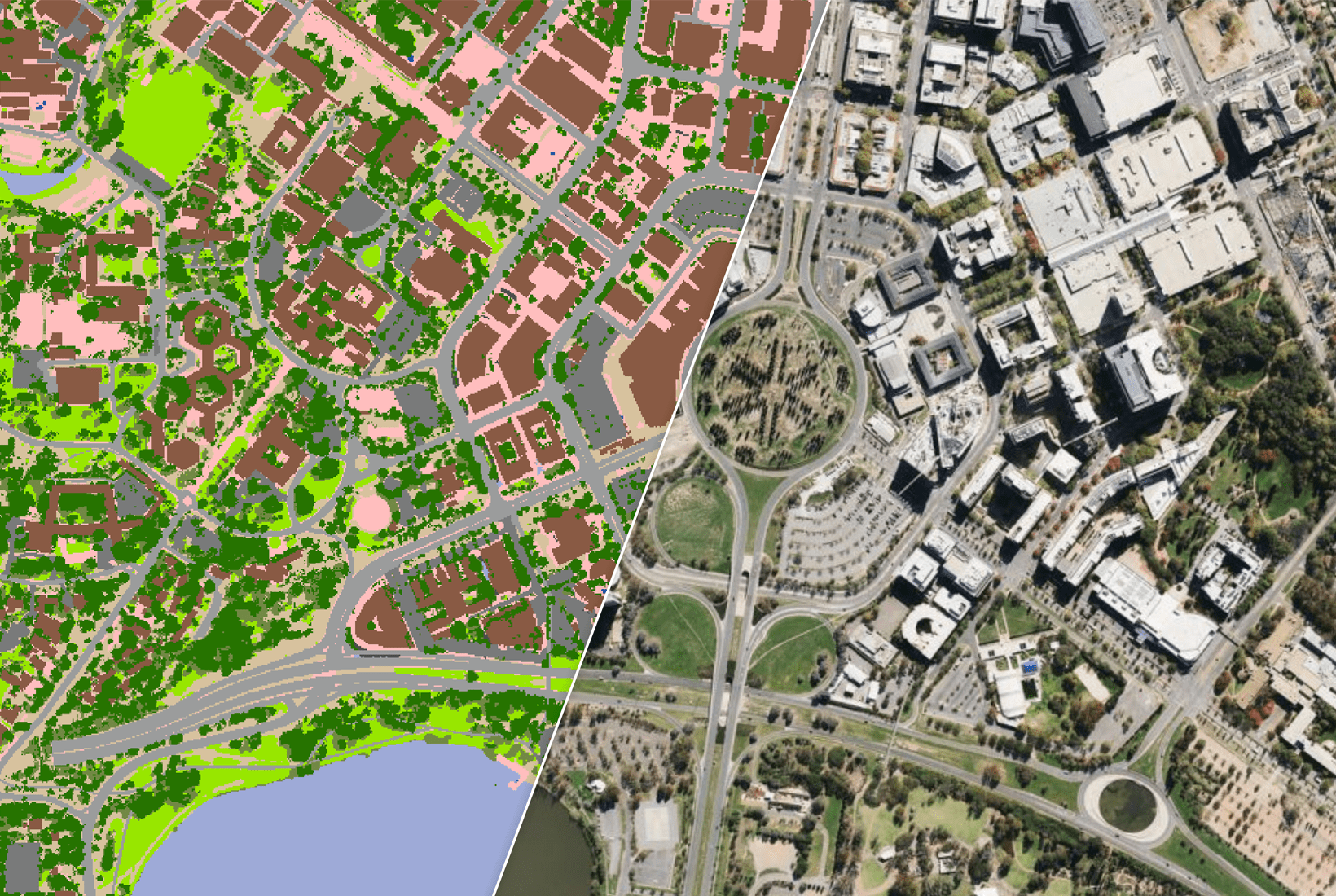
One example that captures the team’s approach is land use and land cover data. Specifically: what happens when you look at a patch of land, see trees, look again a year later, and see nothing.
The instinct is to call it deforestation. Julia’s team doesn’t move that fast. Tree removal can be legal for several reasons:
The team layered additional sources over the raw signal: species data, burn scar records, accurate area calculations. The goal was to understand what actually happened before drawing any conclusions. A change in the data is a starting point, not a conclusion. And that instinct to understand before acting runs through everything the team does, including how they think about where location intelligence is heading.
The strength of the team is the knowledge it brings together. People with deep experience across GNAF, cadastre, roads, and buildings, each understanding a different part of the location data picture, and how those parts connect.
The processes involved are more complex than they appear from the outside, and the knowledge of how location data links together takes years to build. Organisations that underestimate that tend to discover it quickly.
The expectation from data users is shifting too. Organisations no longer want raw data they have to interrogate. They want answers. A bank needs an independent view of what is actually on a property: what is growing there, whether a shed went up last year, how the land has changed.
That is where location intelligence is heading. And before anyone can trust that answer, someone has to check the data behind it. That is what Geoscape’s Data team does. Every supply, every source, before it reaches the customer.